Tiếng Việt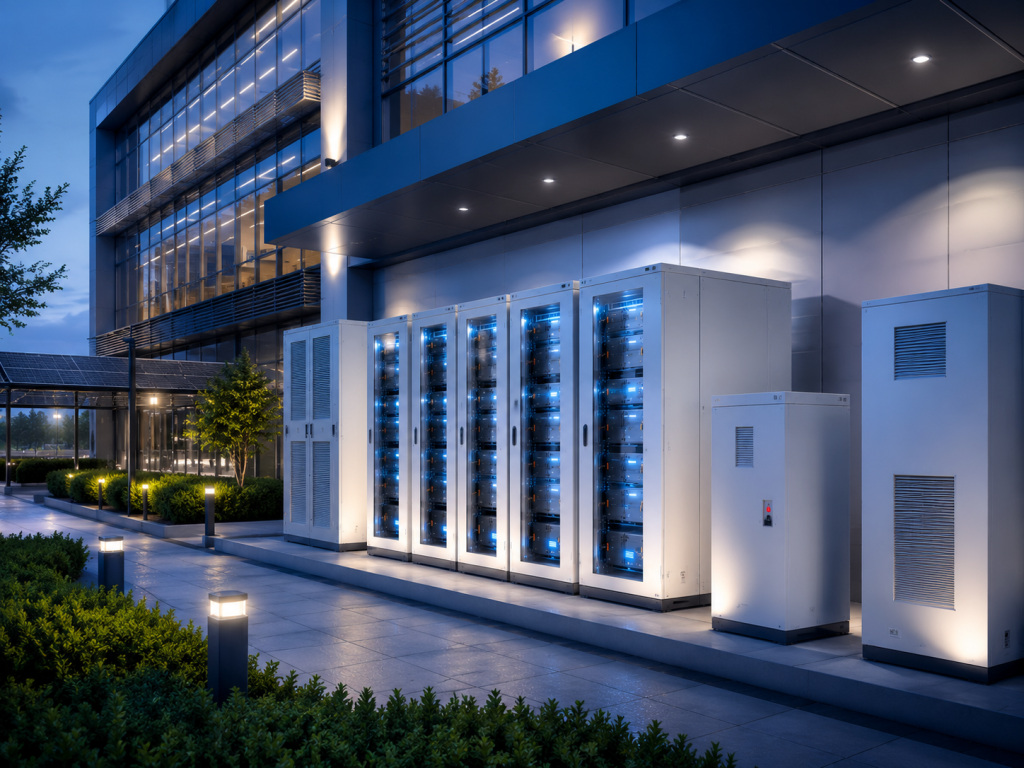
Introduction: Drivers for Transition to Energy Storage Solutions in Vietnamese Enterprises
The rapid development of Vietnam’s economy is driving increasingly higher electricity consumption demands at enterprises, particularly in the commercial and industrial sectors. However, grid overload conditions, rising electricity prices, and carbon emission regulations have created significant challenges for business operations. Facing the need for energy transition and ensuring sustainability, enterprises are actively seeking solutions to optimize energy supply and reduce operational costs.
- Pressure on electricity costs: Budget allocation for electricity in total operating costs remains a top concern.
- Increasing power outage risks: The instability of the grid system sometimes causes serious impacts on production chains.
- Commitment to sustainable development: Meeting environmental standards, green development, and CO2 emission reduction are increasingly prioritized by enterprises.
In this context, solutions such as Energy Storage Systems (ESS) have become a viable option to support the energy transition process at Vietnamese enterprises. Implementing ESS not only helps optimize energy use but also enhances sustainable competitive advantages, meeting requirements for green economic development.
To better understand what ESS is, its operating principles, and the important role of this solution in the commercial and industrial sectors, please continue reading the detailed content below.
What is ESS? Operating Principles and Main Classifications
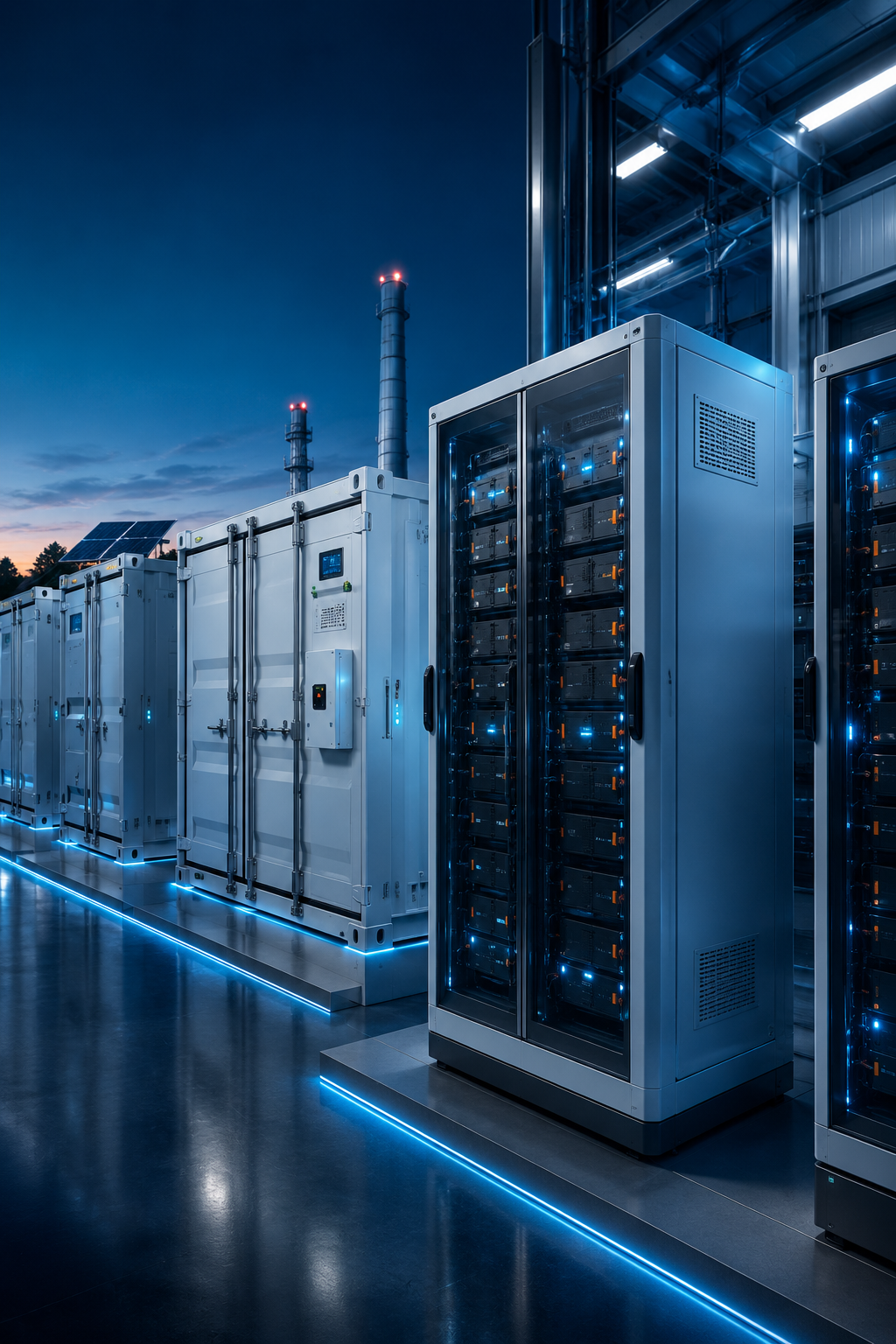
ESS (Energy Storage System) is an electrical energy storage system that uses technologies such as lithium-ion batteries, valve-regulated lead-acid (VRLA) batteries, and flow batteries to store surplus electrical energy from generation sources or the grid and supply it when needed. This is a strategic solution that helps optimize energy management at modern enterprises.
- Operating principle: ESS will charge electricity during times of surplus power supply (daytime, off-peak hours, or when renewable energy systems like solar are generating surplus output) and discharge during peak hours or when power supply is insufficient, helping balance and compensate for load fluctuations.
- Outstanding benefits: With its flexible storage and supply capabilities, ESS helps enterprises gain energy independence, reduce pressure on the national grid, and achieve significant electricity cost savings.
Common ESS system classifications:
- Lithium-ion Battery ESS: High durability, high efficiency, suitable for enterprises needing large-capacity storage and frequent use.
- Flow Battery ESS: Flexible storage capacity expansion, suitable for large-scale industrial projects.
- VRLA (Valve-Regulated Lead-Acid) Batteries: Traditional solution, low initial cost, suitable for short-term storage applications.
Today, ESS is not merely a simple electrical storage system but also integrates many intelligent features such as AI energy control, IoT connectivity, and remote management to optimize operation and protect equipment. For more information about electrical storage technologies, you can refer to the in-depth article on Wikipedia – Energy Storage.
Benefits of Applying ESS for Enterprises
Implementing an electrical energy storage ESS solution brings numerous outstanding benefits to enterprises in the commercial, manufacturing, and industrial sectors:
- Optimize electricity costs: ESS allows storing electricity during off-peak hours and using it during peak hours, helping significantly reduce electricity bills.
- Ensure production stability: When facing grid failures or sudden power outages, the ESS system ensures continuous power supply to critical equipment.
- Support renewable energy development: ESS helps enterprises effectively utilize solar and wind power sources while limiting surplus generation that doesn’t align with usage demands.
- Reduce emissions and environmental friendliness: ESS solutions contribute to reducing greenhouse gas emissions, consistent with sustainable development orientation and green policies of modern enterprises (Forbes: The Energy Storage Decade).
- Enhance competitiveness: Energy independence helps enterprises improve production efficiency, optimize operations, and facilitate business expansion.
Particularly for export enterprises or FDI investments, implementing ESS is a significant advantage in ESG (Environment – Social – Governance) standard assessments, enhancing credibility and international cooperation capabilities in the global market.
Criteria for Selecting Appropriate ESS Systems
To select an ESS system appropriate to an enterprise’s energy needs, the following criteria should be considered:
- Power and storage capacity: Analyze electricity consumption load data, identify peak hours, and determine necessary power storage duration to select an appropriate ESS capacity.
- Operating efficiency: Prioritize ESS with high conversion efficiency and strong charging/discharging capability to minimize energy loss.
- Safety and lifespan: Choose solutions with intelligent protection systems that meet international safety standards (UL, IEC, CE) and have battery lifespan exceeding 10 years.
- Scalability: Select systems that are easily upgraded and can expand storage capacity as future demand grows.
- Compatibility with renewable energy sources: ESS should support integration with solar and wind power to maximize clean energy utilization.
- Maintenance service, warranty, and technical support: Prioritize reputable suppliers with professional teams and good after-sales service policies.
- Investment cost and operational efficiency: Balance between initial investment costs and long-term savings and benefits from ESS operation.
Learn more detailed information through specialized sources on ESS selection consultation for enterprises.
Steps for Implementing Effective Electrical Energy Storage Solutions
Implementing an optimal electrical energy storage solution requires a systematic process and close coordination among the enterprise, supplier, and stakeholders. Main steps include:
- Survey needs and assess existing electrical systems: Collect consumption data, identify scale, typical usage periods, and existing power issues.
- Develop technical solutions and select optimal ESS equipment: Based on actual data analysis, determine the type, capacity, and supporting features that fit.
- Develop investment plans and complete legal procedures: Estimate costs, approval processes, register with energy management agencies, and comply with Vietnamese and international regulations and standards.
- Installation, integration, and trial operation: Install the ESS system at the enterprise, integrate with solar power systems, grid networks, and verify operating efficiency.
- Training, technology transfer, and regular operation: Provide operational and maintenance training, optimize using remote monitoring software and AI.
- Maintenance, monitoring, and system upgrades: Conduct regular inspections and maintenance to ensure stable ESS operation, update software, and upgrade when needs increase.
A systematic implementation process will ensure enterprises maximize investment benefits while minimizing technical and operational risks.
Important Considerations When Investing in ESS for Enterprises
Investing in an ESS system is an important decision that directly affects an enterprise’s operations and long-term costs. Some necessary considerations when evaluating this solution include:
- Supplier verification: Choose partners with extensive experience, credibility, transparency about equipment specifications, and compliance with international safety standards.
- Monitor installation quality: Ensure compliance with standard procedures from survey, installation, inspection, to trial operation.
- Personnel training: Equip management, operation, and maintenance teams with professional ESS knowledge, troubleshooting, and workplace safety assurance.
- Long-term warranty and maintenance policies: Prioritize suppliers committed to periodic maintenance support, equipment replacement, and software updates.
- Consider legal factors: Ensure the ESS system is permitted for installation and operation by electrical authorities; consult relevant regulations regarding energy storage in Vietnam and internationally.
- Budget for unexpected costs: Consider costs beyond estimates such as software upgrades, capacity expansion installation, or equipment replacement.
- Regular efficiency evaluation: Use data analysis software and online monitoring to track system performance and savings.
Considering these points will help enterprises minimize risks and optimize the return on investment in ESS electrical energy storage solutions, building a foundation for stable, economical, and sustainable operations.
Conclusion: ESS Investment – A Solid Step Toward Energy Transition
In a context where the economy and environment increasingly impose new demands, investing in electrical energy storage ESS solutions is a solid step helping commercial and industrial enterprises proactively adapt and increase sustainable competitive advantages. ESS not only helps optimize costs and ensure stable operations but also accompanies enterprises toward green goals, carbon emission reduction, and building a modern and progressive image.
With support from advanced technologies and commitment from management, ESS will be the “key” driving effective digitalization and energy transition processes, helping Vietnamese enterprises stand firm on their journey toward global economic integration.