Tiếng Việt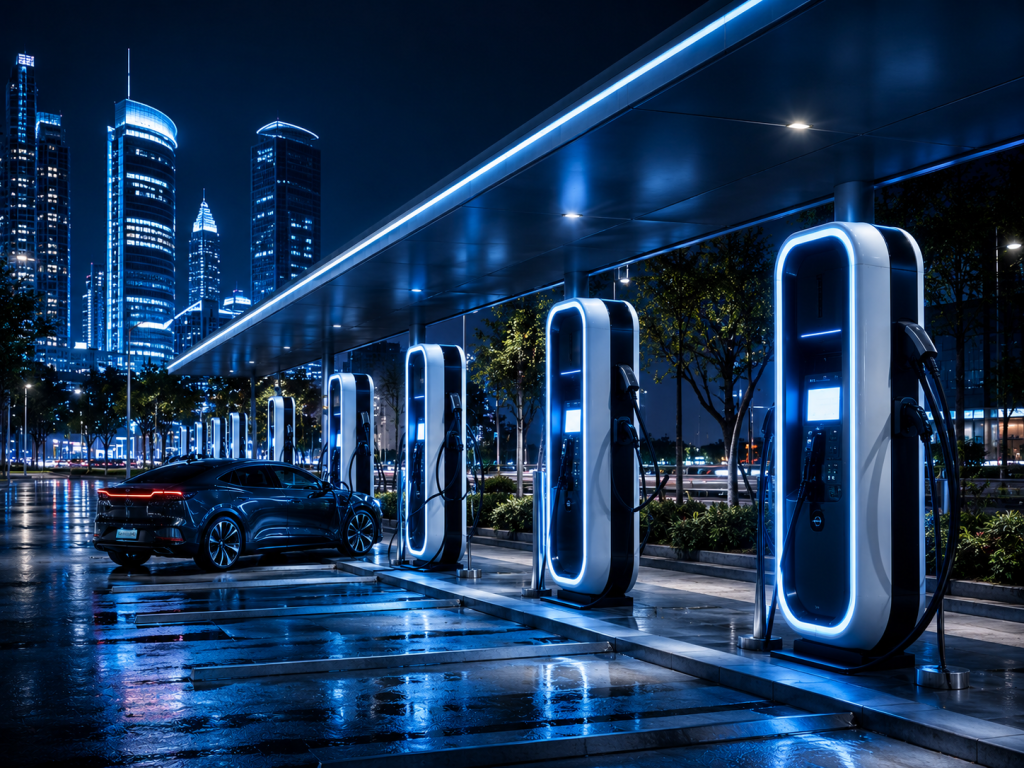
Introduction: Green Charging Station Trend Combining Solar Energy and Storage
In the context of businesses worldwide undergoing strong transitions toward sustainable development, EV charging stations integrated with solar power and battery storage (PV & ESS) are becoming a new and prominent trend for modern cities. Beyond reducing carbon emissions, this model delivers outstanding economic and operational value.
Along with rapid development of the electric vehicle (EV) industry, demand for smart and sustainable charging infrastructure continues growing. The integrated model combining solar photovoltaic (solar PV) and energy storage systems (ESS – Energy Storage System) provides autonomous power source solutions, cost optimization, and ensures continuous charging operations.
Why do businesses, parking lots, and office buildings view this trend seriously? Let’s explore the details in the following sections.
- The combination of renewable energy and storage enhances flexibility for EV charging infrastructure
- Urban greening trends, electricity cost optimization, and reduced load on national grid
- Increased brand value and social responsibility for pioneering organizations
Model of EV Charging Stations Integrated with PV and ESS
EV charging stations integrated with PV and ESS represent a complete combination of solar panel systems, energy storage equipment (lithium batteries or new technologies), power converters, and intelligent EV charging poles.
- Solar Power (PV): Solar panel systems installed on parking lot roofs, buildings, or premises, helping generate clean electricity.
- Battery Storage (ESS): Stores electricity during off-peak hours or when charging demand spikes; ensures stable power supply even during grid outages.
- Smart Energy Management System: Automatically distributes power optimally between PV, battery storage, and grid, increasing energy usage efficiency.
- Fast and standard charging poles: Flexibly meeting various vehicle types and simultaneous needs.
Particularly, thanks to ESS flexibility, this model helps maximize solar electricity utilization during sunny hours and still ensures charging capability even at night or during grid failures. Hybrid capability (combining multiple energy sources) also helps reduce load on the national grid – very important in large cities.
This model also integrates smart management solutions like IoT and AI to monitor and optimize operations throughout each day.
Learn more about integrated charging station technology on Forbes
Economic, Environmental & Operational Benefits for Businesses
Building EV charging stations integrated with solar power and battery storage delivers numerous outstanding benefits for businesses, not only financially but also in operational efficiency and social responsibility.
- Save on electricity costs: Ability to self-generate and store electricity helps businesses gain autonomous power sources for charging, reducing dependence on constantly fluctuating grid electricity prices.
- Reduce CO2 emissions: Using renewable energy contributes to minimizing greenhouse gas emissions, aligning with ESG trends and international green standards.
- Stable operations – No fear of power cuts: ESS battery storage ensures continuous charging supply even during grid failures, maintaining uninterrupted operations for employees or customers.
- Enhance brand value: Businesses owning green charging stations are highly valued for sustainable development commitment, attracting environmentally-conscious customers and partners.
- Opportunity to leverage incentive policies: Many programs encourage renewable energy use, offer tax exemptions, or provide green investment support from domestic and international sources.
Investing in this model is a smart choice for modern businesses wanting to proactively embrace the green future, improve image with reputable partners, and appeal to dynamic young workforce.
Learn more about corporate sustainable development standards on HubSpot
Steps to Build Integrated Charging Stations for Buildings/Parking Lots
Realizing an integrated EV charging station requires systematic processes and careful consideration of both technical and strategic aspects. Below are standard implementation steps:
- Survey & assess needs: Determine the number of electric vehicles served, maximum power capacity needed, convenient installation locations.
- Select technology solutions: Choose solar panels with appropriate efficiency, ESS battery with suitable capacity, select chargers (standard or ultra-fast speed) based on purpose.
- Integrate smart energy management systems: Ensure IoT connectivity, load forecasting, and prioritize solar electricity use when possible.
- Synchronized design & construction: Arrange properly between PV, ESS, and charging areas; coordinate with experienced engineering teams to ensure safety and international standards compliance.
- Trial operation inspection, user training: Effectively manage and maintain systems; update user guidance procedures.
- Monitor – Maintain – Report periodically: Apply online management monitoring software, ensure equipment lifespan and system continuity.
- Note: Always check legal requirements, permits from authorities, ensure compliance with fire safety regulations and related electrical standards.
Efficiency Indicators and Practical Implementation Lessons
Evaluating an integrated EV charging station’s effectiveness involves more than just power capacity; several key indicators must be considered:
- Self-consumption rate: Measure solar and stored electricity used versus total daily charging consumption.
- Grid electricity cost reduction rate: Calculate actual savings compared to traditional grid-only electricity use.
- Investment Return on Investment (ROI): Often significantly improved by leveraging solar incentives and subsidized/reduced ESS prices in certain areas.
- CO2 emission reduction: Recorded by automatic monitoring systems, supporting transparent ESG reporting and increasing corporate CSR scores.
- Scalability: Easy to add charging poles, additional PV panels, or upgrade ESS batteries when vehicle traffic increases rapidly.
Success lessons: Pioneer projects in major cities like Ho Chi Minh City and Hanoi show: Choosing experienced implementation partners, accurately determining power requirements from the start, and applying smart management solutions are keys to success for this model.
Note: Learn from successful countries like Germany, USA, and Japan, where infrastructure and management have reached international standards (IEA Clean Energy Innovation Report).
Conclusion: Lead Sustainability Trends with Integrated Charging Stations
Investing in EV charging stations integrated with solar power and battery storage is not only a smart economic solution but also a strong commitment toward sustainable development and a green future for businesses. From practical success lessons, this model clearly reduces cost risks, stabilizes operations, while enhancing competitiveness and brand image in the global market.
Proactively embrace trends and prepare solid foundations for the explosion of clean vehicles. Integrated EV charging stations with PV & ESS are the key to leading the green economy era across all sectors.