Tiếng Việt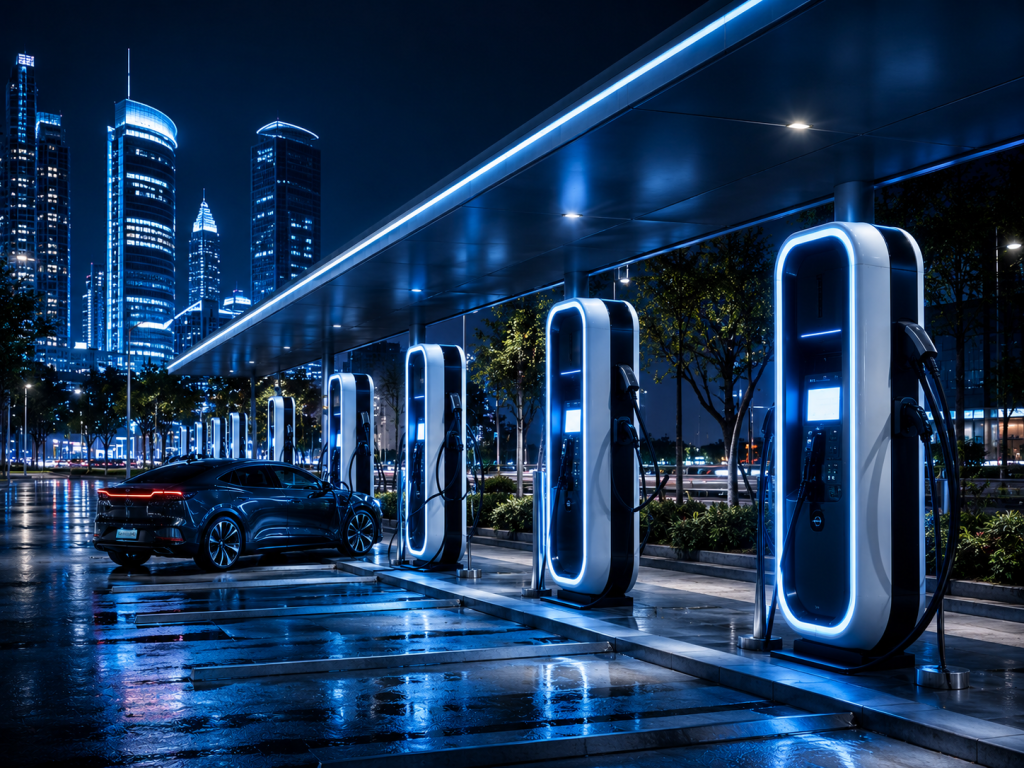
Introduction: EV Charging Stations – An Inevitable Trend in Modern Business Operations
EV charging stations are becoming essential infrastructure for many modern businesses, reflecting the green operation trend. As the economy rapidly shifts toward clean energy, investing in AC and DC EV charging stations is not only environmentally significant but also a smart business strategy that enhances corporate image and optimizes long-term operational costs.
With the rapid development of electric vehicles (EVs) and regulations encouraging zero-emission transportation in Vietnam and worldwide, businesses ranging from real estate to hotels, industrial zones, and retail chains are beginning to consider investing in EV charging station installations. However, amid a range of modern charging technologies, the choice between AC or DC charging stations still leaves many business owners uncertain: How do AC and DC EV charging stations differ? Which should businesses choose?
This article will provide in-depth analysis of each charging station type, helping businesses select the most suitable solution for their practical needs and stay ahead of sustainable operation trends.
Comparing AC and DC Charging Stations: Principles & Charging Speed
In today’s market, EV charging stations are divided into two main types: AC charging stations (Alternating Current) and DC charging stations (Direct Current). Understanding the correct operating principles and fundamental differences in charging speed between these two types is essential when selecting appropriate charging stations for a business.
- AC charging stations: Supply alternating current (AC) to the onboard charger integrated in the vehicle, where the current is converted to direct current (DC) to charge the EV battery. By using the vehicle’s onboard charger, AC stations are simple and easy to install, but charging speed depends on each vehicle’s charger capacity.
- DC charging stations: Supply direct current (DC) directly to the vehicle’s battery, significantly reducing charging time. DC stations integrate the power converter within the device itself, allowing very high power output suitable for vehicles requiring fast charging (fast charging or ultra-fast charging).
Charging speed differences:
- AC charging (7–22kW power): Fully charges a vehicle battery in 4 to 8 hours (according to Wikipedia).
- DC charging (50–350kW power): Can charge 80% of battery in 30-60 minutes, even faster with ultra-fast charging models.
Thus, the key difference between the two types is charging capacity and charging time, directly affecting vehicle operation flow and customer/business experience.
Benefits and Limitations of Each Charging Station Type
To make an optimal EV charging station selection decision, businesses need to carefully compare the two types regarding features, benefits, and practical limitations.
- AC charging advantages:
- Lower initial investment cost, suitable for medium and small businesses or dispersed public charging points.
- Easy installation, operation, and maintenance with adjustable power levels (7kW, 11kW, 22kW).
- Ideal for overnight charging, long-term charging at offices, apartment buildings, logistics units, and parking facilities.
- AC charging limitations:
- Charging speed depends on the vehicle’s onboard charger and is only suitable for vehicles traveling moderate distances daily.
- Not ideal for public charging stations on national highways, rest areas, or businesses needing rapid vehicle turnover.
- DC charging advantages:
- Extremely fast charging speed, meeting urgent charging needs, especially for electric taxis, buses, highway rest areas, and large industrial zones.
- Minimize vehicle downtime for charging, increasing fleet operational efficiency and revenue from charging stations.
- DC charging limitations:
- High investment costs, requires more installation space, and demands three-phase high-power electrical sources.
- Requires upgraded technical infrastructure with more complex operation and maintenance costs compared to AC charging.
According to Forbes research, smart combination of charging station types helps businesses optimize every customer segment and enhance the transportation electrification ecosystem.
Selection Criteria Suitable for Business Needs
Choosing between AC or DC EV charging stations should be based on practical criteria reflecting the business’s operational characteristics. To optimize costs and investment efficiency, business owners should consider these important factors:
- Fleet size: If vehicle quantity is small, charging frequency is not frequent, and primarily overnight charging is needed, AC charging is a sensible choice. Conversely, for large fleets needing rapid turnover charging, DC charging stations are optimal.
- Usage context: Office buildings, apartments, parking facilities – prioritize AC charging; industrial zones, rest areas, large logistics transfer points – should prioritize DC charging or combine both.
- Electrical grid infrastructure: Verify the business’s power supply capability at the charging station installation location, ensuring stable three-phase power if implementing DC charging.
- Business objectives: Businesses aiming to add value-added services for customers (buildings, shopping centers…), AC charging is appropriate. For commercial vehicles, transportation services, and electric taxis – DC charging should be prioritized for fast service times.
- Future expansion plans: Choose flexible solutions that easily expand charging ports and integrate synchronized management software.
Thorough analysis of these criteria will help businesses find the most suitable EV charging station type aligned with operational objectives and investment efficiency.
Experience in Effective EV Charging Station Investment and Installation
When deciding to invest in and install EV charging stations, businesses should note practical experiences to optimize financial efficiency and operational management:
- Survey actual needs: Evaluate the number of electric vehicles, usage frequency, and travel routes to accurately determine the number and power capacity of stations needed.
- Select quality equipment: Prioritize reputable charging brands meeting international standards (IEC, UL, SAE…) to ensure safety and compatibility with various vehicle types.
- Optimize site layout: Charging stations should be positioned conveniently, well-ventilated, easily accessible, ensuring fire safety and compliance with infrastructure planning regulations.
- Integrate smart management software: Apply charging station management platforms helping monitor status, schedule maintenance, enable cashless payment, and issue QR codes for customer use.
- Collaborate with reputable technology consulting firms: Professional units will provide support from surveying, design, installation, operation, and maintenance of charging stations, helping optimize resources and ensure compliance with current regulations (learn more at HubSpot).
- Leverage financial and tax support policies: Actively explore and utilize government incentive policies supporting businesses investing in green infrastructure such as tax reductions, preferential credit loans, etc.
Additionally, regular maintenance and remote monitoring software updates will help businesses minimize risks and long-term operational costs.
Conclusion: Smart Charging Station Investment – Lead the Green Trend
In the context of accelerating green operation trends, investing in AC and DC EV charging stations not only answers the question How do AC and DC EV charging stations differ? Which should businesses choose? but also provides a comprehensive solution helping businesses improve image, optimize operations, and deliver sustainable value.
With rapid EV industry development and favorable incentive policies, businesses investing in smart charging stations are positioning themselves as pioneers, seizing future market opportunities, and creating a green impression in customers’ and partners’ minds.
- Choosing appropriate charging solutions – the key to improving operational efficiency and long-term profitability for modern businesses.
- Flexibly combining AC and DC charging stations will optimize capacity to serve diverse vehicle types, advancing toward sustainable business models and development.
It’s time for businesses to proactively keep pace with transportation electrification green trends and leverage smart investment opportunities with EV charging stations.